Source Front Black Brake Sensor for Cars, Trucks, and SUVs
Compare 25 available front black brake sensor options from verified Chinese suppliers. Buyers can evaluate specifications, pricing, and delivery times for automotive brake system components.
Key considerations
Products List


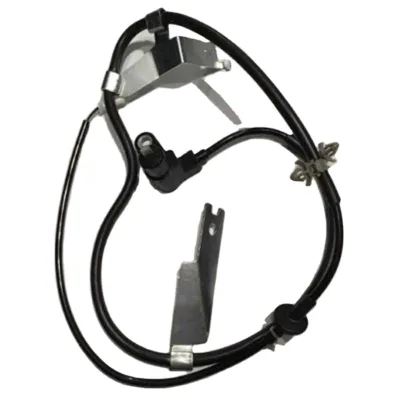
Comprehensive Sourcing Guide
Strategic Sourcing Guide for Front Black Brake Sensors
The global automotive aftermarket and original equipment manufacturing (OEM) sectors rely heavily on precise components to ensure vehicle safety and operational efficiency. Among these, the front black brake sensor represents a critical subsystem within the broader brake system architecture. For procurement professionals, navigating the market for these specific components requires a disciplined approach that balances technical verification with supply chain reliability. This guide synthesizes available product data and industry standards to provide a comprehensive framework for sourcing front black brake sensors, focusing on material integrity, certification compliance, and logistical planning.
Technical Specifications and Material Composition
When evaluating front black brake sensors, the primary technical differentiator lies in the material composition and the specific functional positioning within the vehicle. The supplied product data indicates a clear distinction between components designed for the front and rear positions, with specific models designated for front applications. The material profile for these sensors varies significantly based on the intended function and durability requirements. Steel is a primary material observed in the catalog, often associated with structural integrity and high-temperature resistance required for brake system components. Conversely, rubber is also listed as a material, suggesting the presence of flexible seals or insulating elements essential for sensor functionality and noise reduction.
The physical attributes of these sensors are equally critical. The "Front" position is explicitly identified as a key attribute for specific product lines, distinguishing them from rear-positioned alternatives. The color specification is consistently noted as "Black," which is standard for brake system components to resist heat discoloration and maintain a uniform aesthetic within the wheel assembly. The product models range from alphanumeric codes such as 00001-28889 to specific part numbers like 2115401717 and 34356775850. These identifiers are not merely labels; they correspond to specific vehicle fits and performance standards. Buyers must verify that the model number matches the vehicle's original equipment manufacturer (OEM) requirements, as the size is often described as "OE Standard Size," implying a direct replacement capability without modification.
Furthermore, the classification of these components often falls under the "Disc" category, indicating their compatibility with disc brake systems. The packing specifications vary from simple plastic bags to more robust solutions like wooden cases, cartons, and pallets. This variation suggests that the physical dimensions and fragility of the sensors differ across models. For instance, some products are packed in "Plastic Bag+Nuetral White Box+Carton+Crates or PAL," while others utilize "Cartons with Pallets." Understanding these packaging requirements is essential for logistics planning, as improper packaging can lead to damage during transit, particularly for sensors containing delicate electronic or mechanical elements.
Compliance and Certification Verification
In the automotive industry, compliance is not optional; it is a prerequisite for market entry and operational safety. The sourcing of front black brake sensors must be underpinned by rigorous certification checks. The available data highlights several certification standards that suppliers may claim to meet. These include ISO/TSIATF-AMECA, ISO/TSISOIATF-ISOECE, and general ISO certifications. The presence of these standards suggests that the manufacturing processes adhere to international quality management systems and specific automotive industry technical specifications.
However, buyers must exercise caution when interpreting these certifications. The data lists certifications such as "ISO/TSISO" and "ISO/TSIATF-AMECA" alongside market regions like South America, North America, and Eastern Europe. It is imperative to verify that the specific certification applies to the exact model being purchased. A supplier may hold a general ISO certification for their facility but lack specific approval for the brake sensor model in question. The "ISO/TSISOIATF-ISOECE" designation is particularly significant, as it implies adherence to both International Organization for Standardization (ISO) standards and the International Electrotechnical Commission (IEC) standards, which are crucial for electronic components like brake wear sensors.
Additionally, the "Quality: 100% Tested" attribute found in the product data indicates a commitment to pre-shipment inspection. While this is a positive indicator, it should be treated as a supplier claim rather than an absolute guarantee. Buyers should request evidence of these testing protocols, such as batch test reports or third-party validation documents. The "Standard" attribute listed as "Steel" or "Rubber" in some contexts refers to the material standard rather than a regulatory certification. Therefore, procurement teams must distinguish between material standards and quality management certifications to ensure that the sensors meet the specific regulatory requirements of their target markets, whether domestic or international.
Cost Drivers and Pricing Dynamics
The pricing structure for front black brake sensors is influenced by a complex interplay of factors, including material costs, manufacturing complexity, and order volume. The observed price range in the market spans from $0.10 to $955.88 USD. This wide variance is not indicative of a single product type but rather reflects the diversity of the supply base, ranging from basic mechanical sensors to high-end electronic systems with advanced features. The lower end of the spectrum likely corresponds to simple mechanical wear indicators, while the higher end may encompass integrated electronic sensors with complex circuitry and enhanced durability.
Minimum Order Quantity (MOQ) is another significant cost driver. The data shows an MOQ range from 1 to 1000 units, with specific models requiring a minimum of 50 pieces. Suppliers often structure their pricing tiers based on these volume thresholds. A buyer ordering 50 units will face a different unit cost compared to one ordering 1000 units. The availability of "Free Samples" is a notable feature in the market, allowing buyers to validate product quality before committing to a larger order. This reduces the financial risk associated with trial sourcing.
Lead times also impact the overall cost of procurement. The observed delivery times range from 7-15 days to 15-30 days. Longer lead times may necessitate higher inventory holding costs or more complex supply chain planning, which can indirectly increase the total cost of ownership. Buyers should consider the trade-off between a lower unit price with a longer lead time versus a higher unit price with immediate availability. The origin of the products, primarily from locations like Cangzhou and Shandong in China, suggests that shipping costs and import duties will be additional variables in the final landed cost calculation.
Typical Applications and Market Distribution
Front black brake sensors are integral to modern vehicle safety systems, primarily serving as wear indicators for disc brake pads. Their application is widespread across various vehicle types, from passenger cars to commercial trucks. The "Front" positioning indicates their specific role in monitoring the wear of front brake pads, which typically experience higher stress and wear rates than rear pads. The "Disc" classification confirms their compatibility with disc brake systems, which are standard in most modern vehicles.
The market distribution for these sensors is global, with suppliers targeting a wide array of regions. The data lists markets including South America, North America, Eastern Europe, the Middle East, Southeast Asia, Africa, Western Europe, Northern Europe, Oceania, Southern Europe, Central America, South Asia, and the Domestic Market. This extensive reach suggests that the supply chain is well-established and capable of meeting diverse regulatory and environmental requirements. However, buyers must ensure that the sensors they source are compliant with the specific regulations of their target market. For instance, sensors intended for the European market may need to meet stricter emission and safety standards compared to those for the domestic market.
The customization options available in the market, such as "Customized" packing and potential model modifications, allow suppliers to tailor products to specific client needs. This flexibility is particularly valuable for large fleet operators or OEMs with unique requirements. The "Product Name: Brake Pad Wear Sensor" explicitly defines the function, ensuring that buyers are sourcing the correct component for their specific application. Understanding the typical applications helps in selecting the right sensor model, ensuring optimal performance and longevity in the field.
Supplier Evaluation and Quality Control
Evaluating suppliers for front black brake sensors requires a multi-faceted approach that goes beyond price comparison. The presence of "Customization: Available" indicates that suppliers are willing to adapt their offerings, which is a positive sign of flexibility and customer focus. However, the core of supplier evaluation must rest on their ability to maintain consistent quality. The "Quality: 100% Tested" claim is a strong starting point, but it must be backed by transparent quality control processes.
Buyers should request detailed documentation regarding the testing procedures used. This includes information on the types of tests performed, such as durability testing, temperature resistance, and electrical continuity checks. The "Standard" attribute, which varies between "Steel," "Rubber," and "Standard," should be cross-referenced with the supplier's quality manual to ensure that the materials used meet the specified requirements. The "prod_standard" field, which lists values like "35X25X10cm" for some products, likely refers to packaging dimensions rather than product standards, highlighting the need for careful interpretation of data fields.
Furthermore, the origin of the products, specifically from Cangzhou and Shandong in China, provides insight into the manufacturing ecosystem. These regions are known for their automotive component manufacturing capabilities. Buyers should verify the specific factory certifications and audit reports for the facilities producing the sensors. The "Delivery Time" of 7-15 days or 15-30 days should be evaluated in the context of the supplier's production capacity and reliability. A supplier with a consistent track record of meeting lead times is preferable to one with fluctuating delivery schedules, as this impacts inventory management and customer satisfaction.
Long-Term Procurement Considerations
Sourcing front black brake sensors is not a one-time transaction but a long-term strategic relationship. The availability of "Free Samples" and "Customized" options suggests that suppliers are open to building long-term partnerships. However, buyers must consider the sustainability and scalability of their supply chain. The wide range of models, from 00001-28889 to 34352284343, indicates a diverse product portfolio. Buyers should assess whether their chosen supplier can consistently supply the specific models required as their business grows or as vehicle models evolve.
The "Main Market" data, which covers almost every region globally, suggests that the suppliers are experienced in handling international logistics. However, buyers should be aware of potential changes in trade regulations, tariffs, and shipping costs that could affect the long-term cost structure. The "MOQ" of 50 pieces for some models offers flexibility for smaller buyers, while larger buyers may need to negotiate lower MOQs or volume discounts.
Finally, the "Type: Brake System" and "Type: Brake Pads" classifications highlight the interconnected nature of the brake system. Buyers should consider the compatibility of the sensors with other brake components, such as pads and rotors, to ensure a cohesive system performance. The "Position: Front" and "Position: Rear" distinctions emphasize the importance of selecting the correct component for the specific axle. By maintaining a disciplined approach to verification and quality control, buyers can secure a reliable supply of front black brake sensors that meet the rigorous demands of the automotive industry.
FAQs
What certifications do front black brake sensors typically have?
Front black brake sensors often carry ISO/TSISO, ISO/TSIATF-AMECA, or ISO/TSISOIATF-ISOECE certifications. These standards indicate compliance with international quality management systems and automotive technical specifications required for safe operation in various global markets.
How long is the delivery time for these brake sensors?
Delivery times typically range from 7 to 30 days depending on the specific model and order volume. Some suppliers offer a 7-15 day lead time, while others may require 15-30 days to manufacture and ship the components from their origins in China.
Which materials are used to manufacture front black brake sensors?
These sensors are commonly manufactured using steel or rubber materials to ensure durability and proper function. Steel provides structural integrity for high-temperature resistance, while rubber is used for flexible seals and insulating elements essential for noise reduction.
Can I order custom packaging for front black brake sensors?
Yes, customization is available for packaging options including plastic bags, cartons, wooden cases, or pallets. Suppliers can tailor the packing method to specific client needs, ensuring the sensors are protected during transit according to their physical dimensions and fragility.
What is the minimum order quantity for these brake sensors?
The minimum order quantity varies by supplier but can be as low as 1 unit or as high as 1000 units. Specific models often require a minimum of 50 pieces, allowing buyers to select options that fit their inventory and budget requirements.
Where are front black brake sensors typically manufactured?
These sensors are primarily manufactured in locations such as Cangzhou and Shandong in China. Buyers should verify the specific origin for each model to accurately calculate shipping costs and import duties associated with the final landed price.